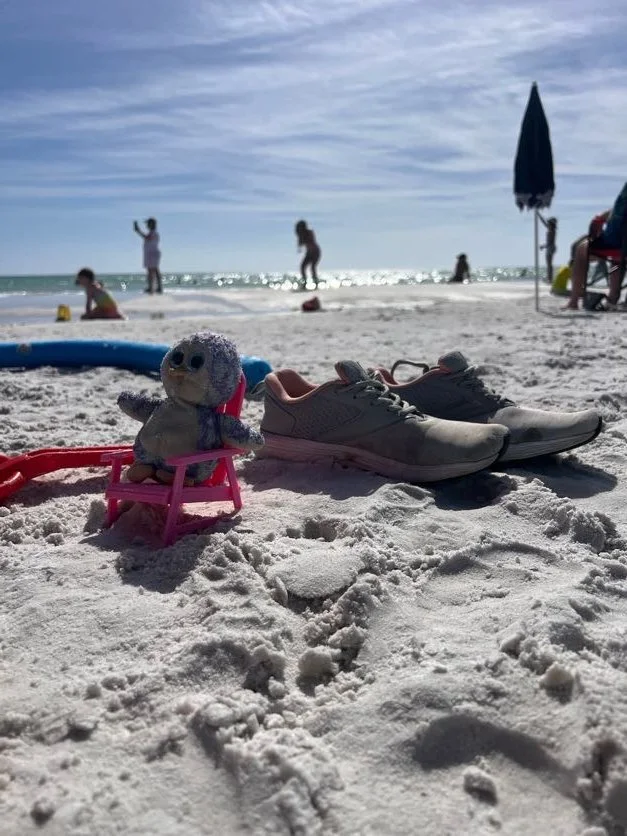
There are days that don't need much explaining. You pack up, you drive across the bridge, you kick off your shoes and everything that felt complicated an hour ago no longer matters.
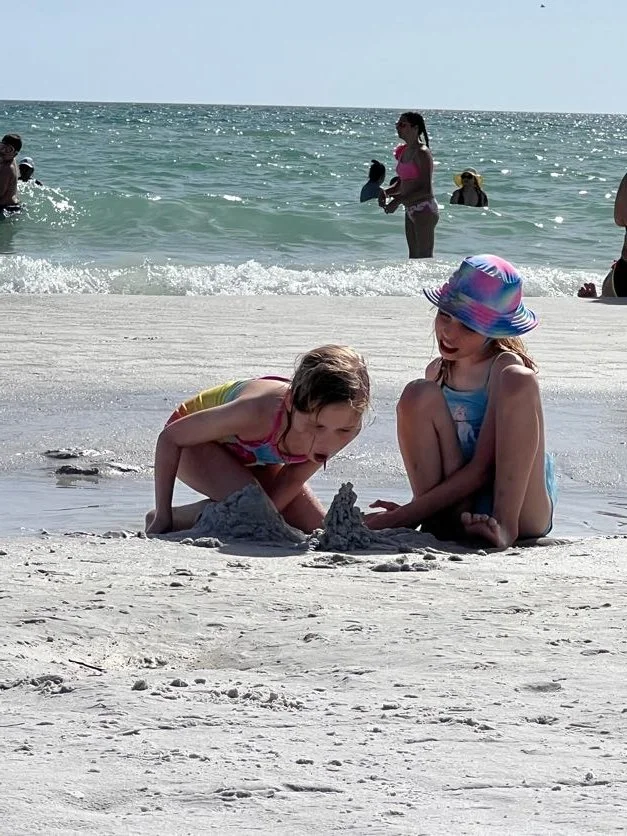
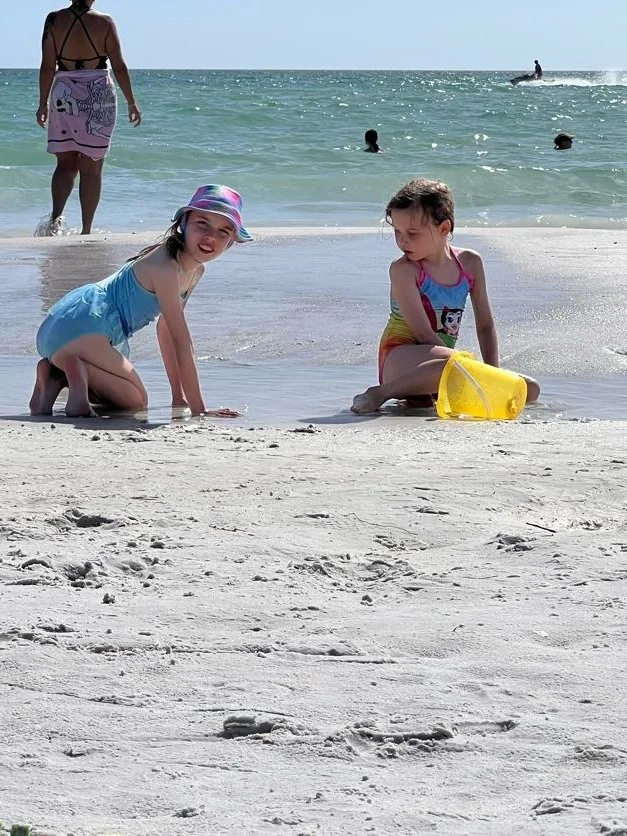
That was last Sunday. Spring on Siesta Key. The water was still on the cold side and impossibly clear, the sand looked almost artificially white, feeling almost miraculous underfoot. The girls were in and out of the water, building something in the sand that kept evolving, arguing gently about its merits, abandoning it for the waves, and then returning. Hop Hop came too, installed in her little pink chair like she'd been planning this trip for weeks.
This is the Gulf Coast life. This is what we're always talking about.
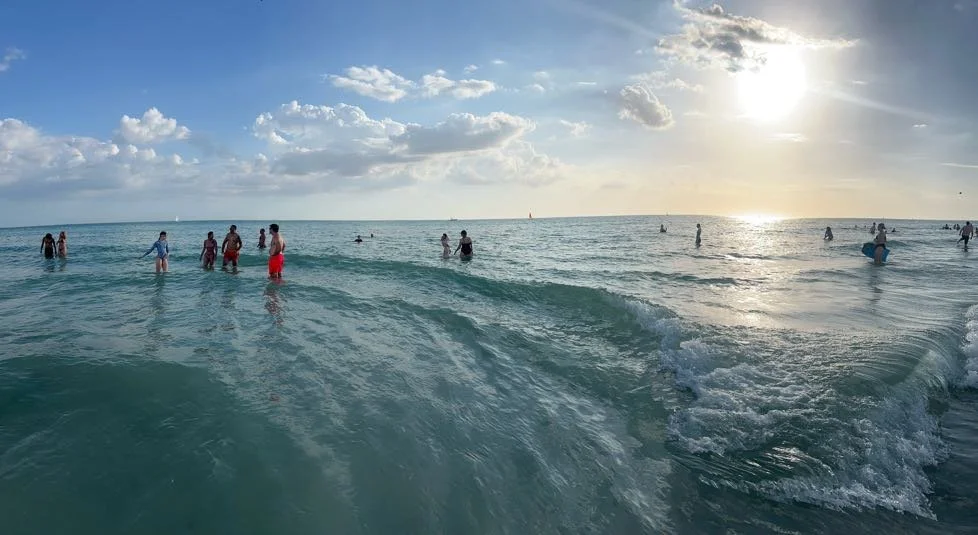
Siesta Beach's sand is 99% quartz, most of which comes from the Appalachian Mountains. Over time the feldspar and mica have been removed from the rock, leaving almost pure quartz. Even on the hottest days, the sand is so reflective that it feels cool underfoot.
That last detail — cool underfoot even in the Florida sun — is the one that’s somehow still surprising. You step onto a beach that looks like it should be scorching and instead find something that feels like cool powder. It's one of those small sensory facts that no description quite prepares you for until you're standing there barefoot in August wondering if you've somehow imagined it.
According to Harvard University geologists, it's estimated that the sand on Siesta Beach and Crescent Beach on Siesta Key is millions of years old, having its origin in the Appalachians and flowing down the rivers from the mountains until it eventually was deposited on the shores of Siesta Key. The sand the girls were building with last Sunday started its journey in the mountains of Georgia and the Carolinas, carried by rivers over millions of years until it came to rest on this particular stretch of Gulf Coast.
In 1987, Siesta Key entered the "Great International Sand Challenge" and Crescent Beach beat more than 30 other contenders to be named the "World's Finest, Whitest Sand." Since then the rankings have kept coming — named the #1 beach in the U.S. in 2011 by Florida International University professor Stephen P. Leatherman, known as "Dr. Beach," who said: "The sand is like sugar. Some people can't believe it. You have to have sunglasses because it's so bright. It's super soft, super fine. In terms of sand alone Siesta Key is definitely the best in the world."
He's not wrong.

Up until the 20th century, Siesta Key was virtually vacant; referred to as Clam Island, Little Sarasota Island, or Sarasota Key. The island was not connected to the city of Sarasota in any way, so the only way to get to and from it was by boat. It had deep vegetation, snakes of all varieties, sand fleas, wildcats and wild boars.
Things began to change in 1906 when Roberts' Inn opened, the island's first hotel, built by the family who had been among its first permanent settlers. Mrs. Roberts wanted to showcase her talent for cooking to more people, and it ended up drawing quite the crowd, including military leaders and Hollywood stars like Charlton Heston, Betty Hutton, and Bette Davis, who visited time and time again.
From there, you know the rest of the story, at least if you've read our post about Harry Higel. The Siesta Land Company. The yacht club on Big Pass. The bridge that finally opened the island to the world in 1917. In 1954, Sarasota County first purchased property on the key for a public beach. The beach that millions of people visit every year — where we are finally back to this last weekend — became public within living memory. It’s worth pausing on.
There's a version of this beach that belongs to the rankings and the awards and the travel magazine articles. And then there's the version that belongs to Sunday afternoons, to sand castles, to plush toys, and the particular freedom of a day with nowhere to be.
Siesta Key contains both versions simultaneously. That's what makes it extraordinary. It is objectively, scientifically, verifiably one of the finest beaches on earth. And it is also just the place you go on a Sunday when the weather is right and the kids need somewhere to put their energy and you need somewhere to take off your shoes.
The Gulf Coast life isn't complicated. It's just very, very good.
