When You Finally Reach the Gul
We almost didn't go.
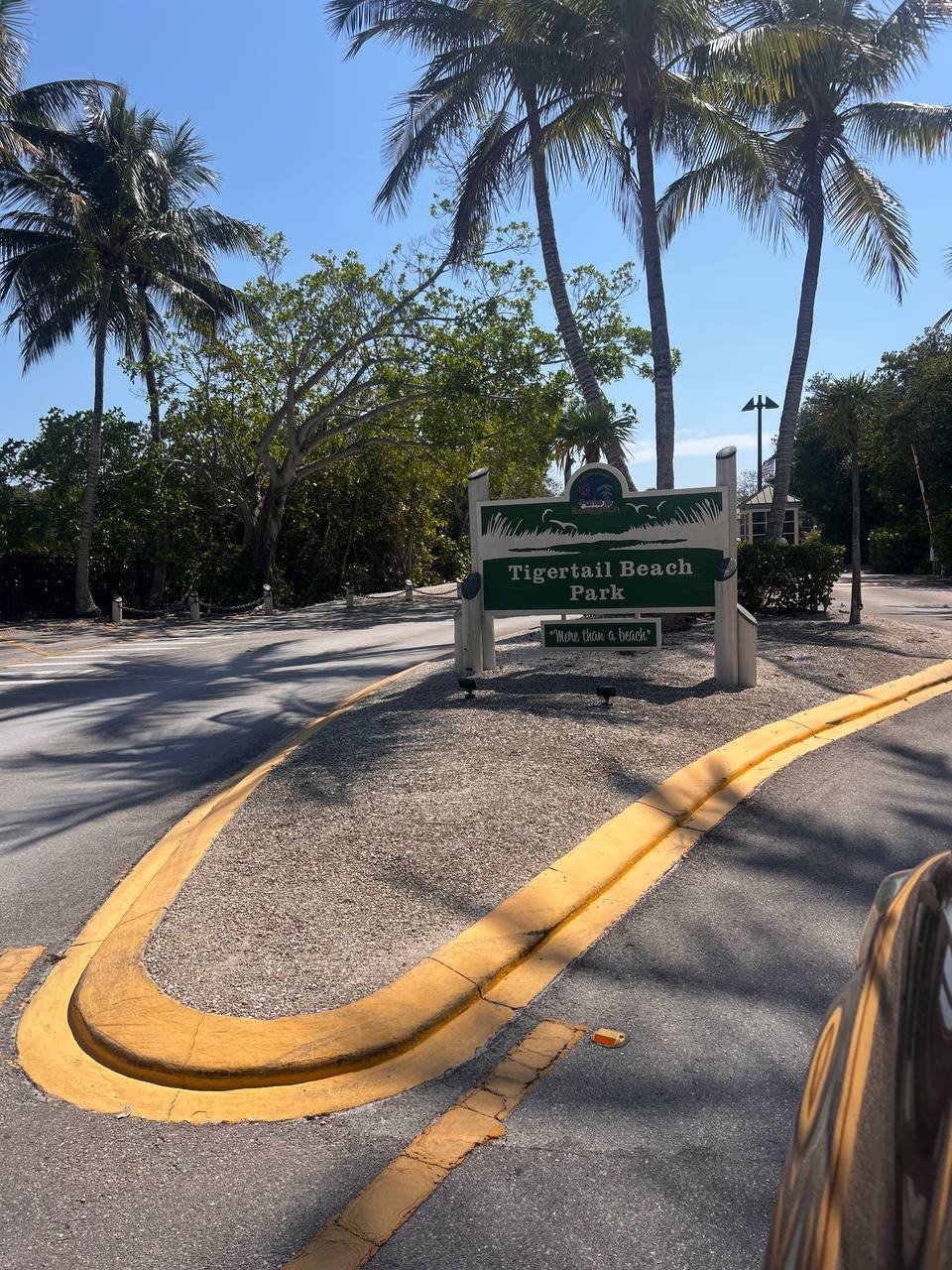
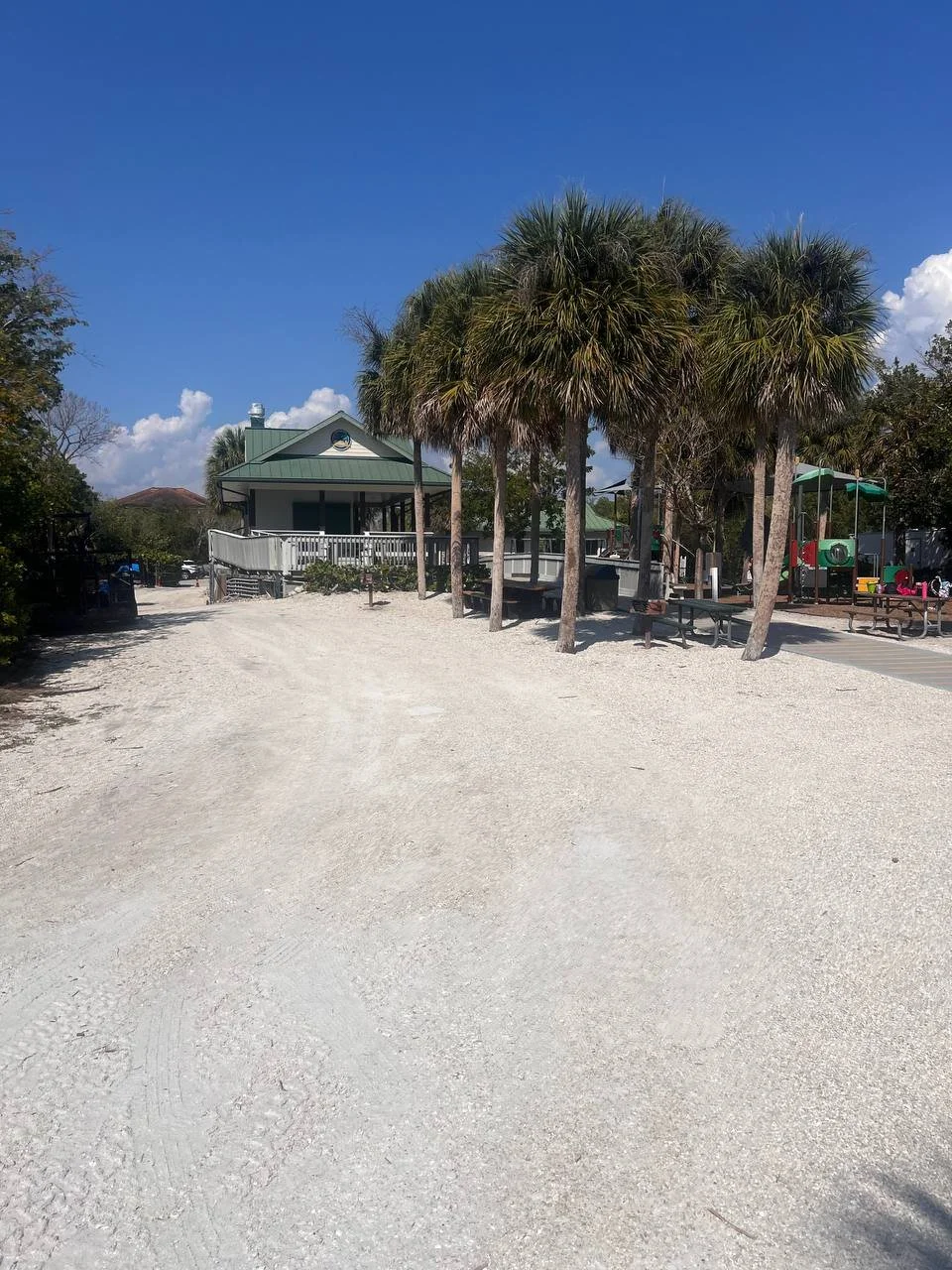
We were picking up some furniture on Marco Island on a Saturday morning. Marco Island is a far drive from Sarasota, and we were all a bit tired by the time the job was done. But on the way out we noticed the Tigertail Beach entrance, and we thought - let's give it a shot. We pulled into what appeared to be a small parking lot.
What we didn't realize was that the adventure had barely started.
Tigertail is not a straightforward beach. It is, technically, two beaches — and the one most people photograph is the one you have to work to reach.
From the parking lot, you walk toward the water and find yourself at the edge of a calm saltwater lagoon. This is the inner beach, and it's lovely on its own — ringed by mangroves, clear and warm, the bottom sandy and shallow. Some people set up their chairs right here and spend the whole day watching herons pick through the shallows while their kids wade and splash.
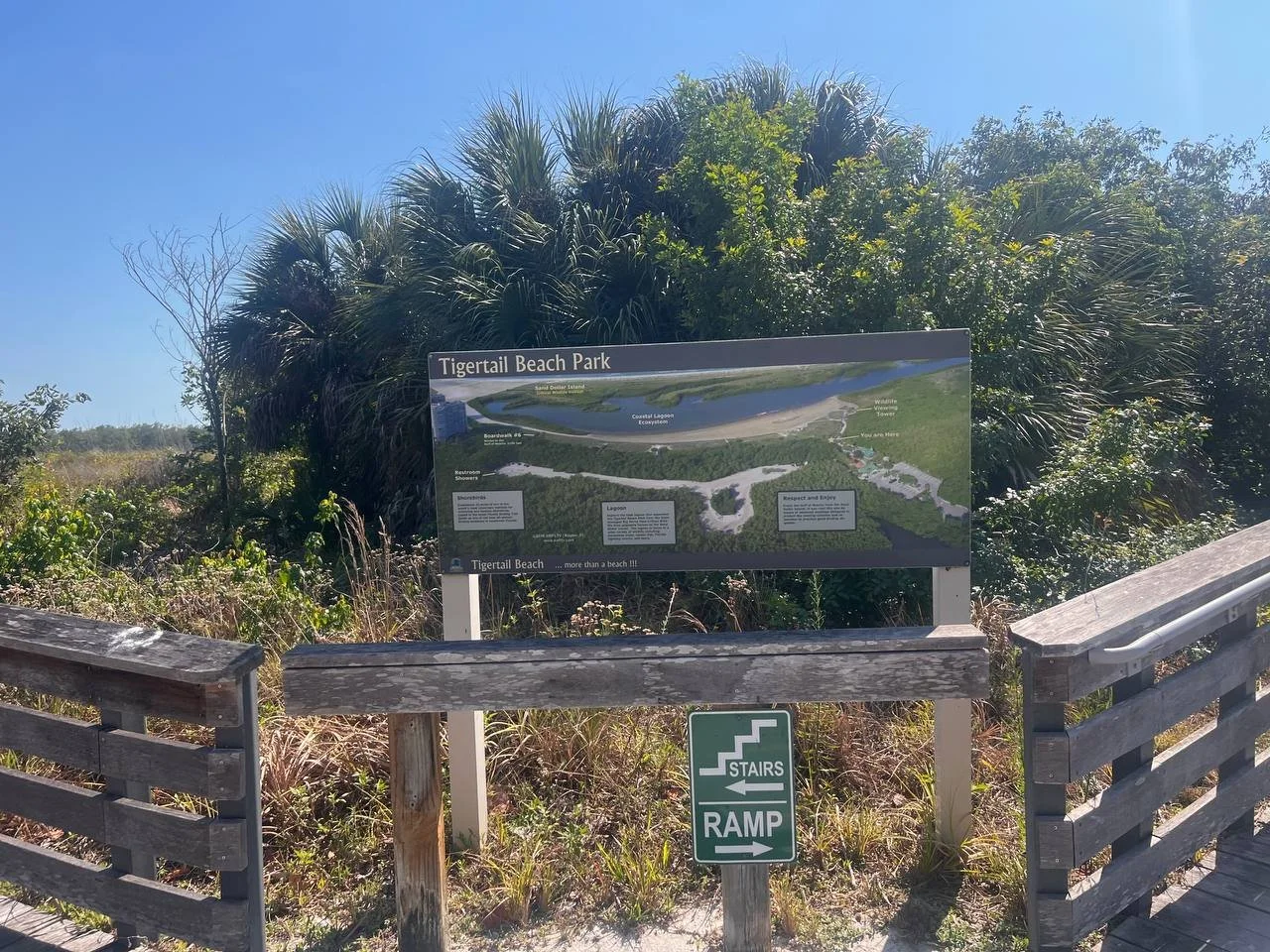
But across that lagoon — maybe fifty yards of warm, knee-to-waist deep water — is something else entirely.
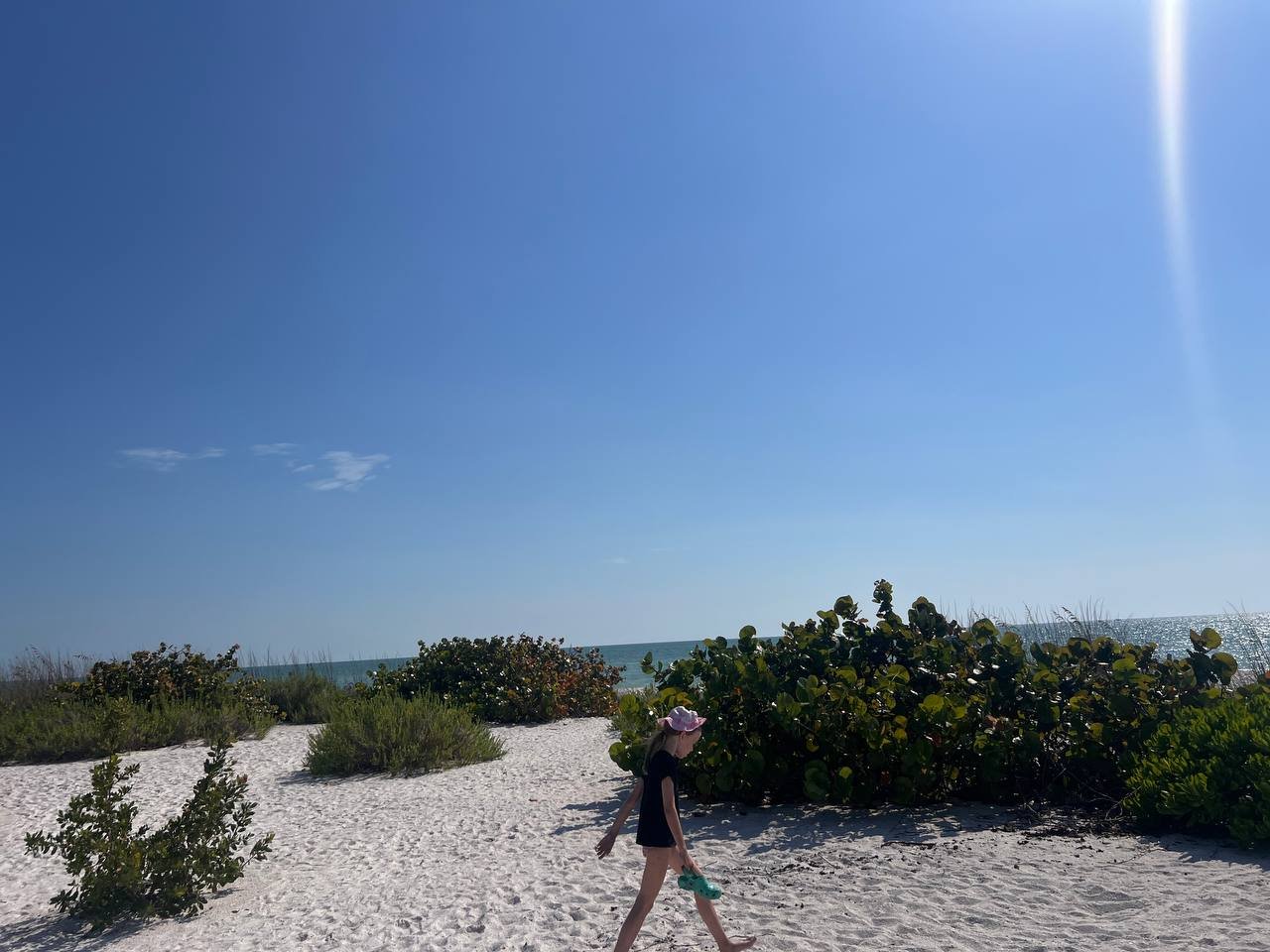
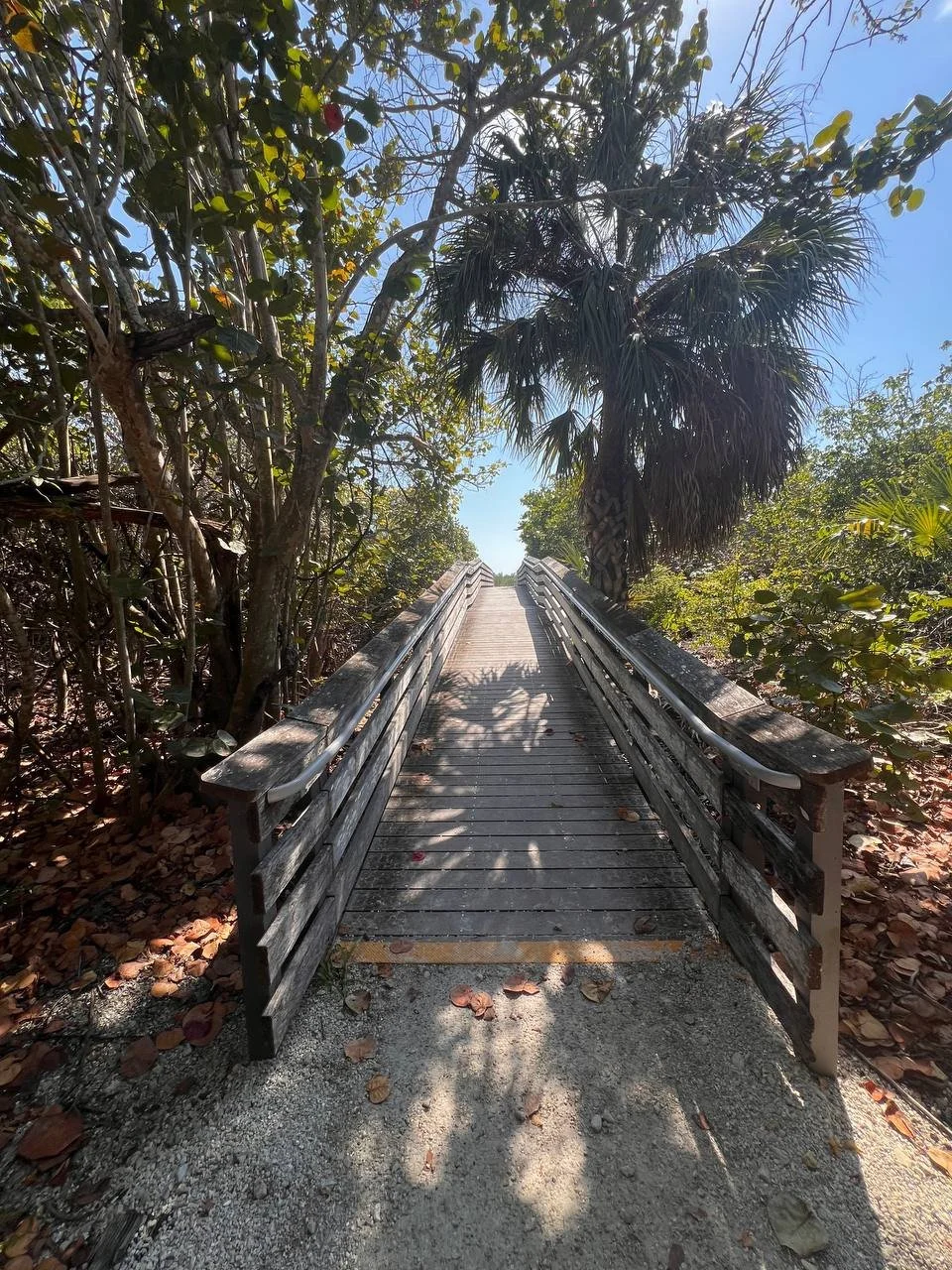
You wade across. You scramble up the far bank. You push through a narrow trail cut through dense sea grapes and coastal scrub, branches brushing your shoulders, the Gulf invisible but somehow already felt. And then the trail opens and there it is — three miles of white sand beach, wide and quiet, the full Gulf of Mexico laid out in front of you with nothing between you and the horizon.
Here is something that will change the way you see Tigertail Beach. It didn't exist fifty years ago. Not in any meaningful way.
What is now the outer beach — Sand Dollar Island, as locals call it — was an offshore sandbar sitting in the Gulf through the 1970s, covered in sand dollars and accessible only by boat. Boaters in the 1980s and 90s loved it for exactly that reason: a wild little sandbar in the middle of the Gulf, loaded with shells, nobody around for miles.
Then the currents shifted. The sandbar began migrating landward. By the 1980s its southern end had attached itself to Marco Island's main beach. The lagoon formed behind it as the spit sealed off a section of calm water from the Gulf. Mangroves colonized the edges. The whole ecosystem — the lagoon, the nesting habitat, the seagrass beds — emerged organically over decades, shaped by tides and storms and the slow mathematics of coastal geology.
Hurricane Wilma in 2005 accelerated everything, piling sand on the spit and pushing its growth further. Then Hurricane Irma in 2017 tore through and reshaped the northern tip, adding fifteen acres to the island's northern end and nearly choking off the lagoon's connection to the Gulf. A major restoration project, completed in 2023, dredged and reshaped the spit to restore tidal flow and expand the nesting beach for sea turtles and shorebirds.
What you're standing on when you cross to the outer beach is, geologically speaking, brand new. A beach still becoming itself. Still being shaped by every storm and every tide. There's something quietly humbling about that.
Tigertail isn't just beautiful. It's ecologically significant in ways that go beyond what most visitors realize.
The lagoon and Sand Dollar Spit together form the Big Marco Pass Critical Wildlife Area, administered by the state of Florida. The Florida Fish and Wildlife Conservation Commission lists it as one of the best all-around birding spots in Southwest Florida — a stop on the Great Florida Birding and Wildlife Trail. Species regularly spotted here include pelicans, bald eagles, osprey, roseate spoonbills, least terns, piping plovers, and Wilson's plovers. On a lucky day, dolphins cruise the outer shallows. Manatees feed in the seagrass beds.
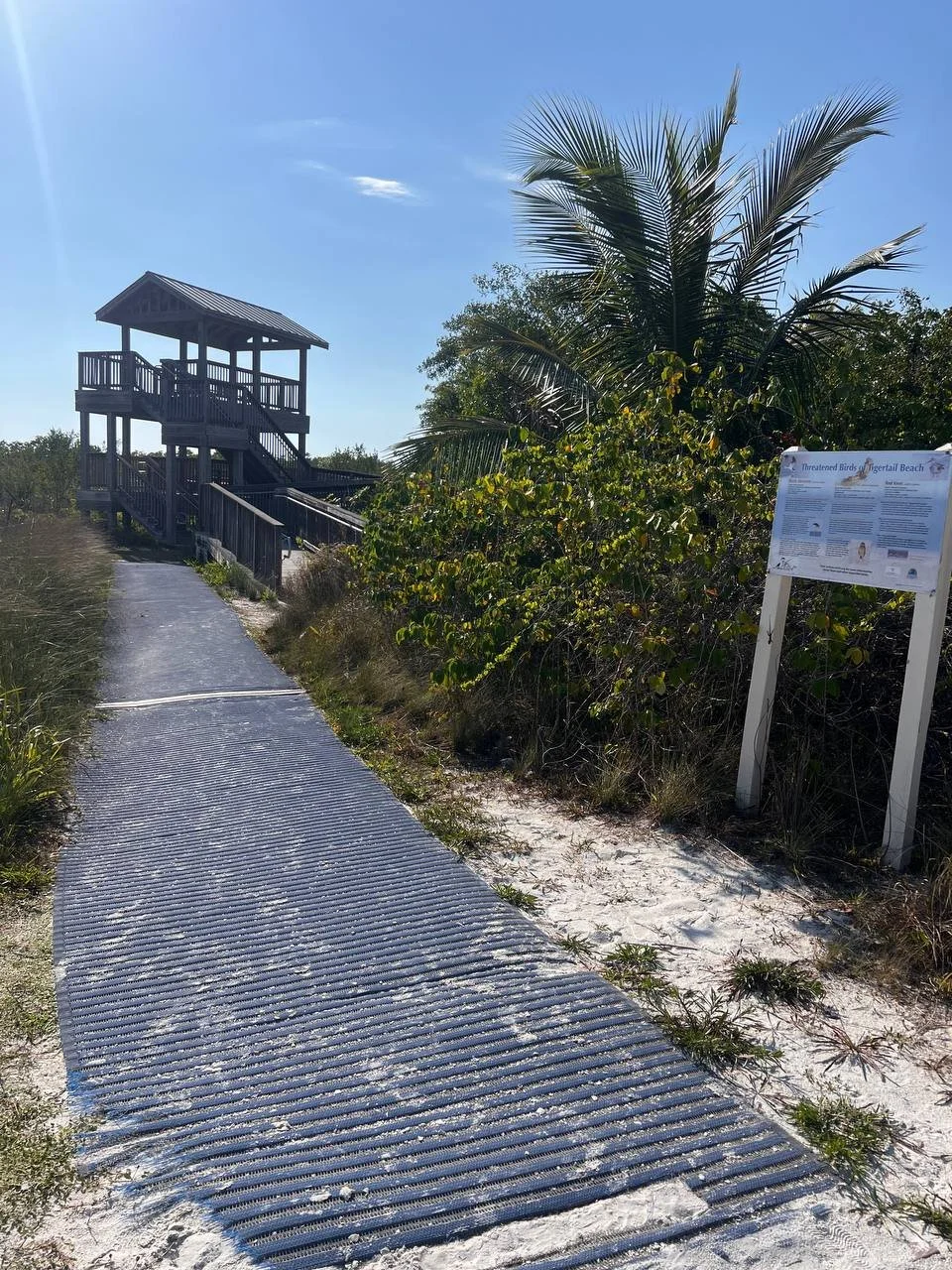
The inner beach has a great viewing stand.
The outer beach is also one of Marco Island's most important sea turtle nesting sites. More than a third of the island's sea turtle nests are laid on Sand Dollar Spit each season. The hatchlings that survive will imprint on this beach and return decades later to lay their own eggs on the same sand.
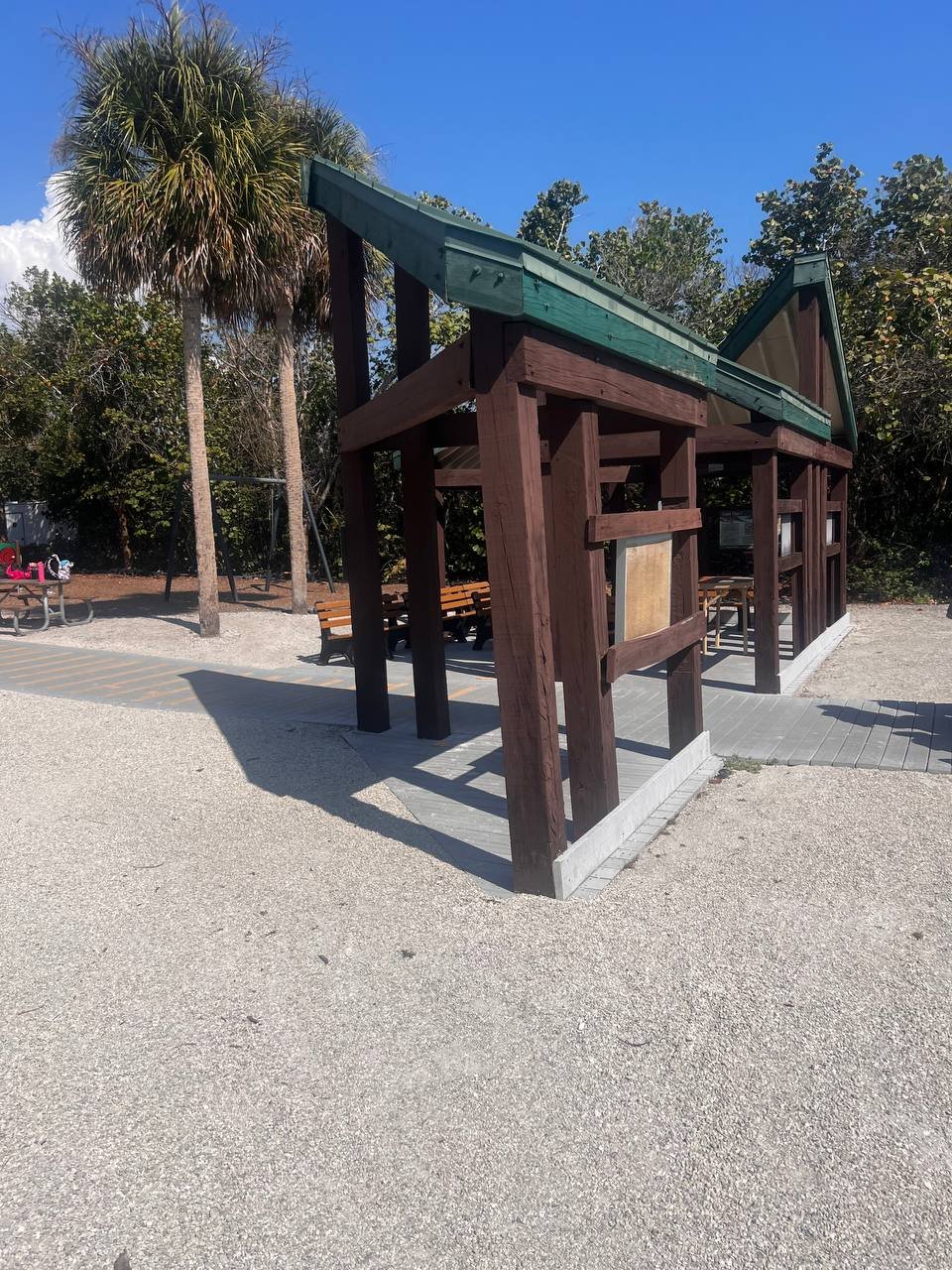
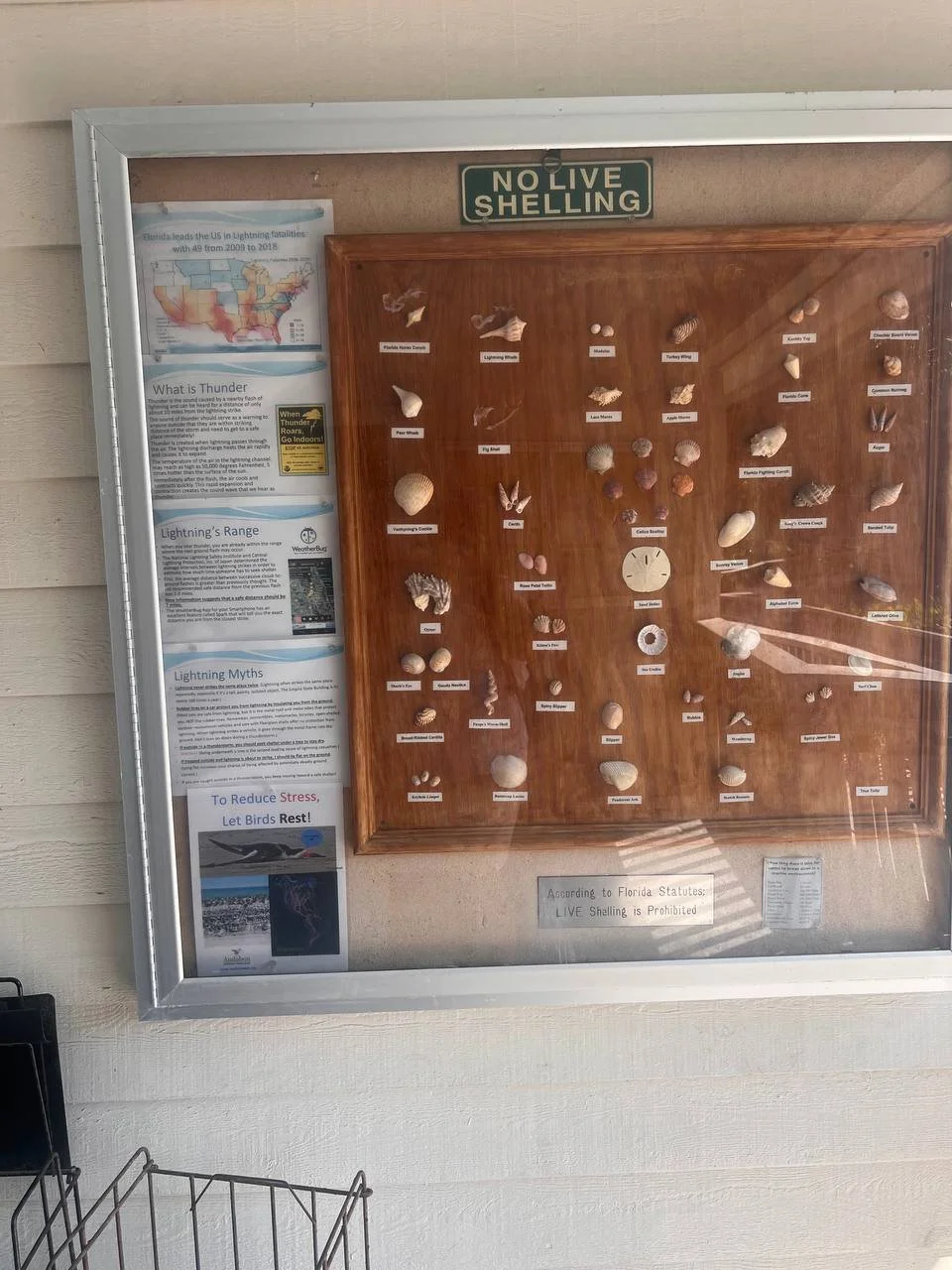
The park pavilion has a shell identification board that stopped me for a good five minutes while the girls kept pulling toward the water. Florida Horse Conch. Pear Whelk. Gaudy Nautica. Lightning Whelk. Vanhyning's Cockle. The Gulf Coast is generous with its shells if you know how to look — and Tigertail is one of the best places on the coast to learn.
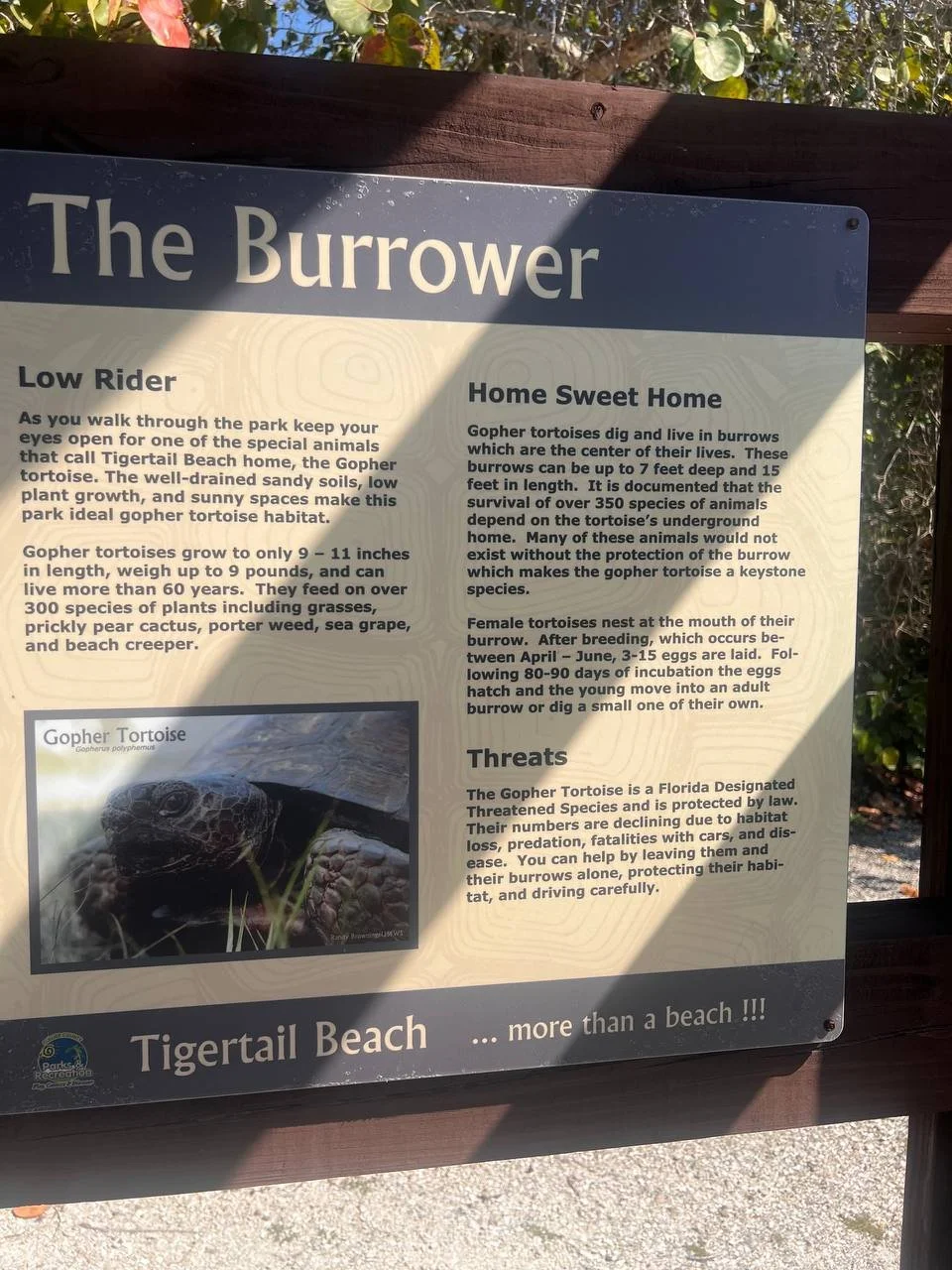
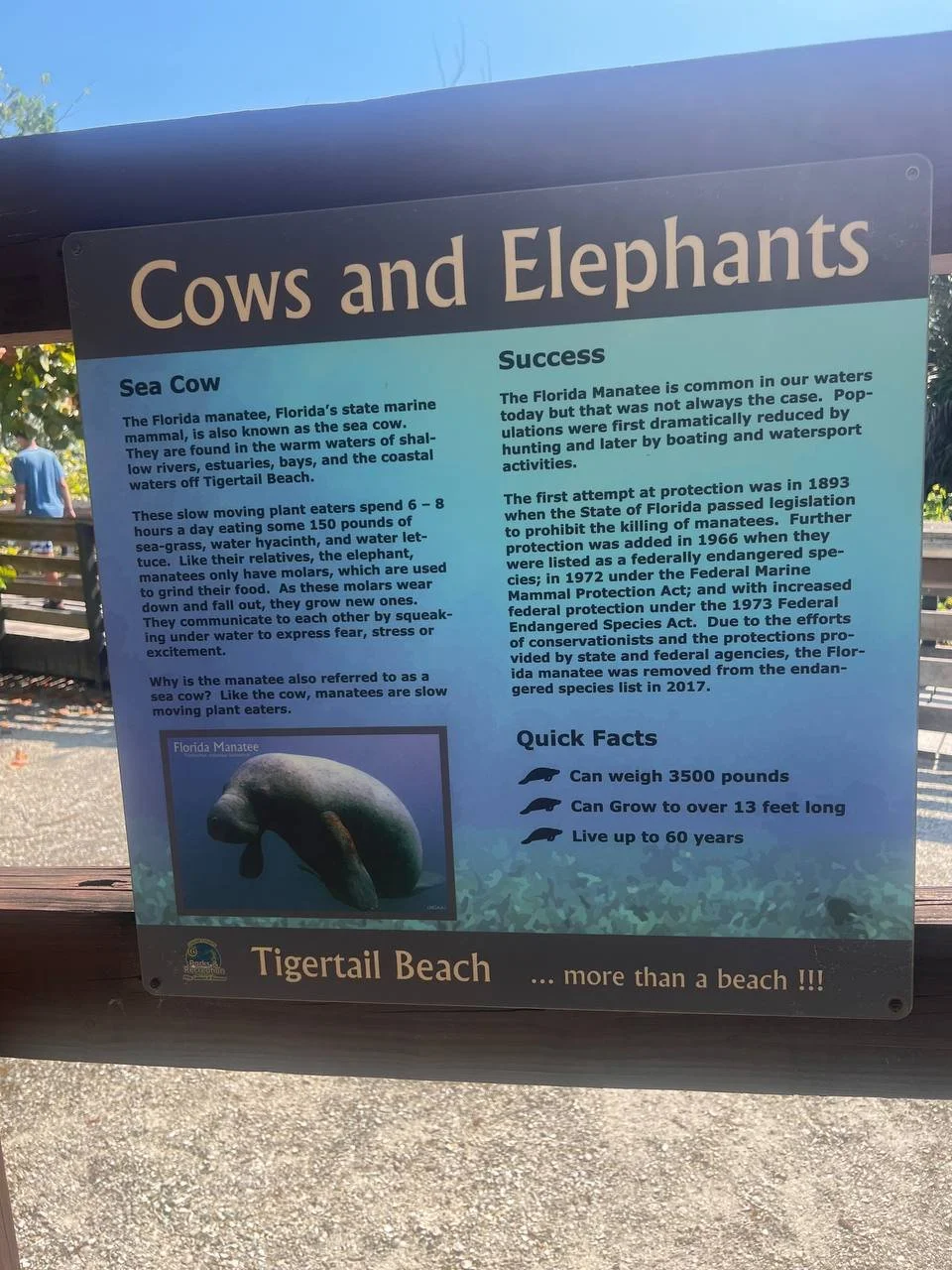
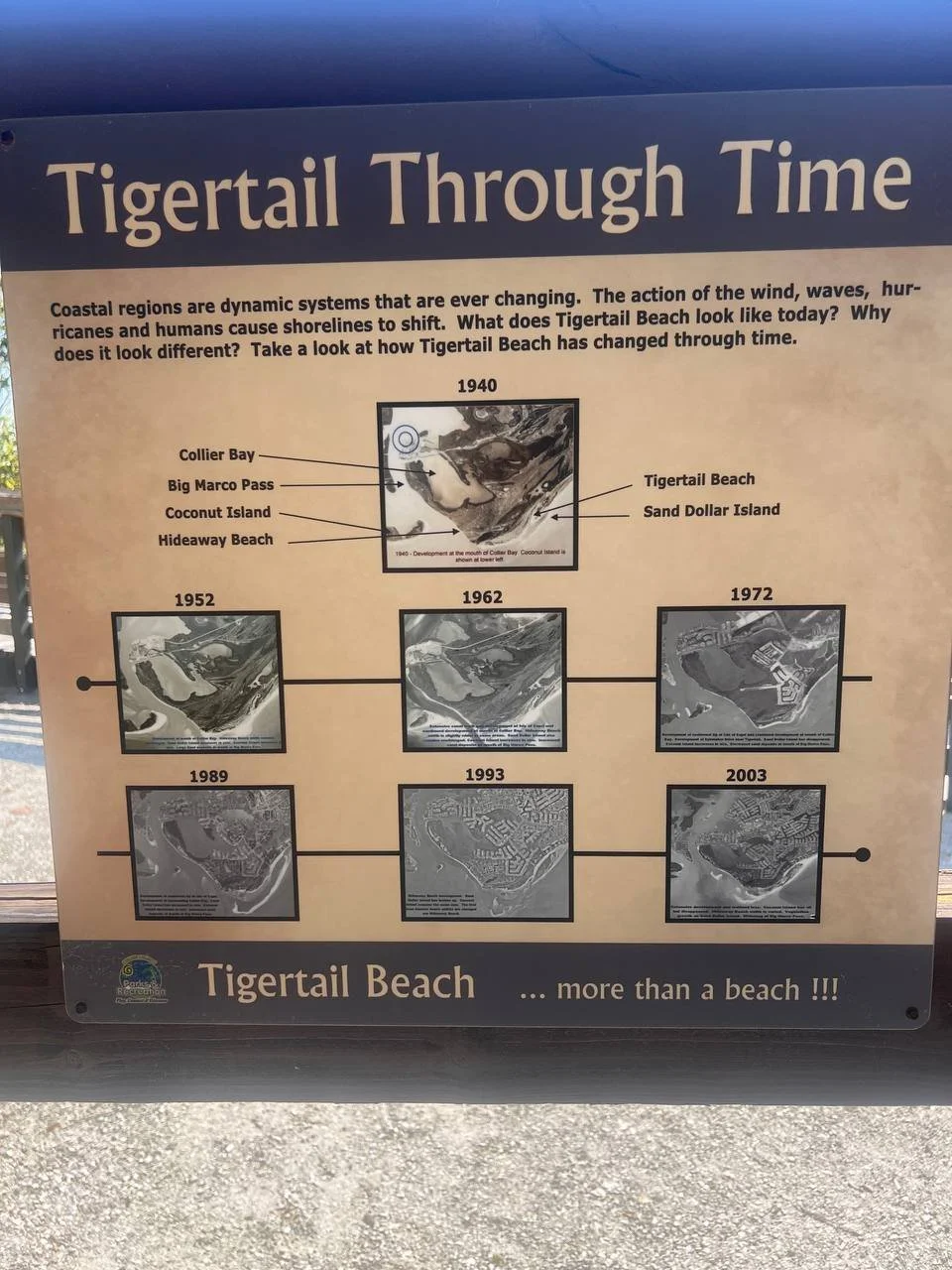
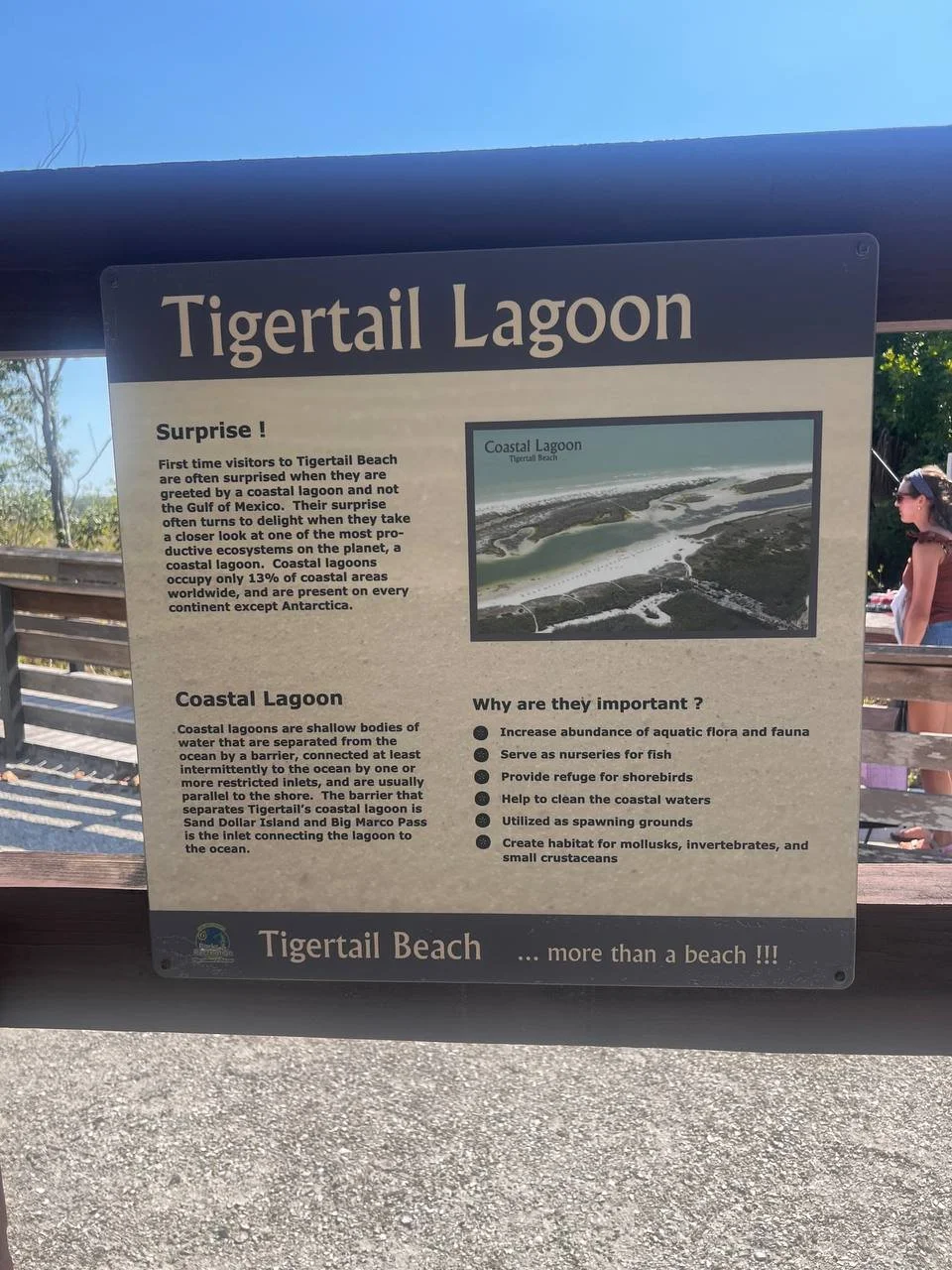
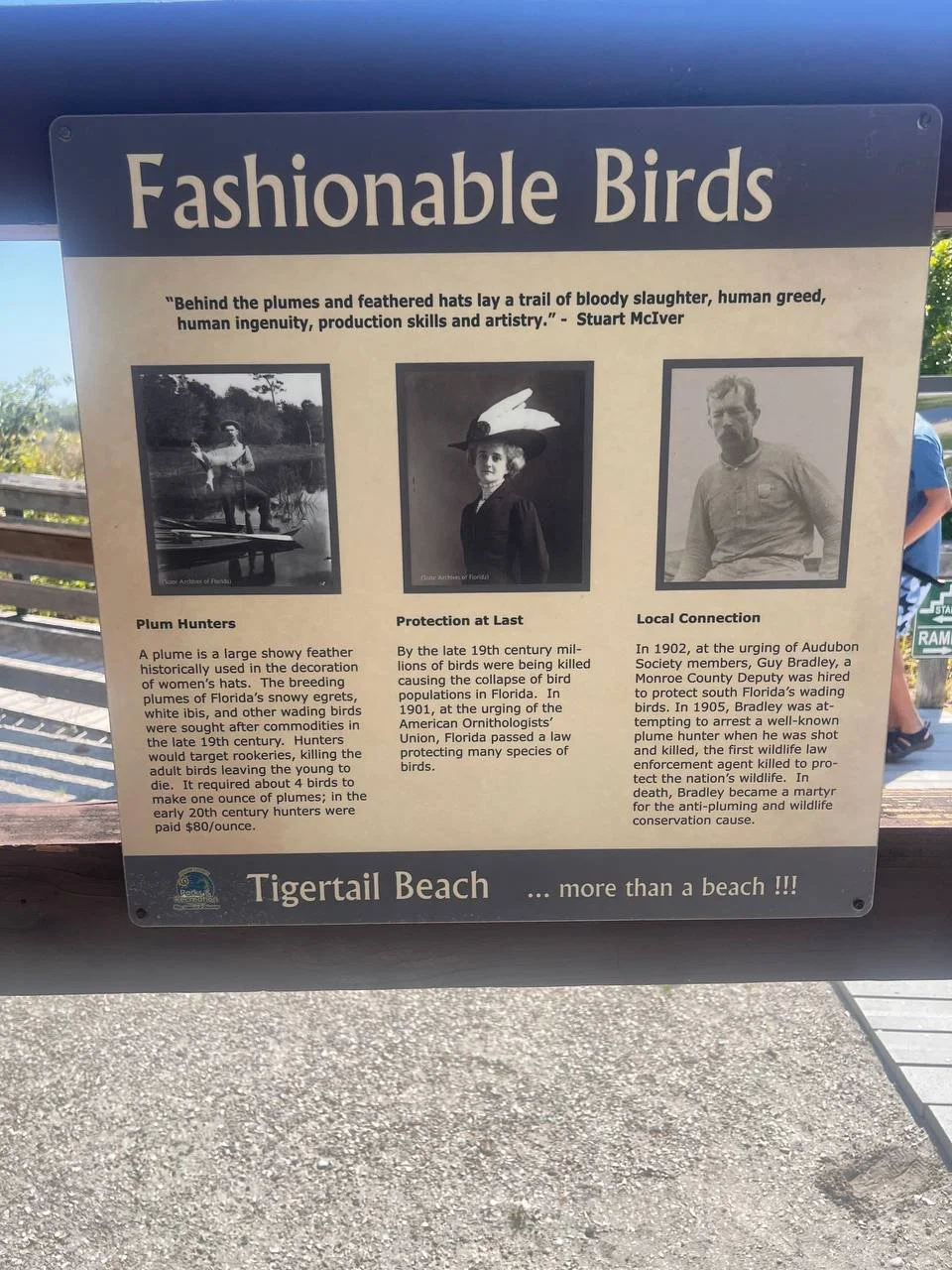
The path through the vegetation from the lagoon to the outer beach is short — maybe a hundred yards — but it's a proper little world in itself. The park has labeled some of the native plants along the boardwalk, and they're worth reading.
The Sabal Palm markers will tell you this is the state tree of Florida, reaching fifty to sixty feet, producing small white fragrant flowers in summer and round black berries that feed wildlife through the fall. Florida's state tree. Growing wild right beside the path to the beach.
Our favorite discovery was the Florida Fish Poison Tree — also known, magnificently, as fishfuddle. The West Indies' native peoples discovered that extracts from this tree could sedate fish, allowing them to be caught by hand. Hence the names: fishpoison and fishfuddle. Its white flowers attract bees in May. It's a larval host for the cassius blue butterfly and the fulvous hairstreak. This tree is living here quietly beside a beach path on Marco Island and almost nobody knows it has that name.
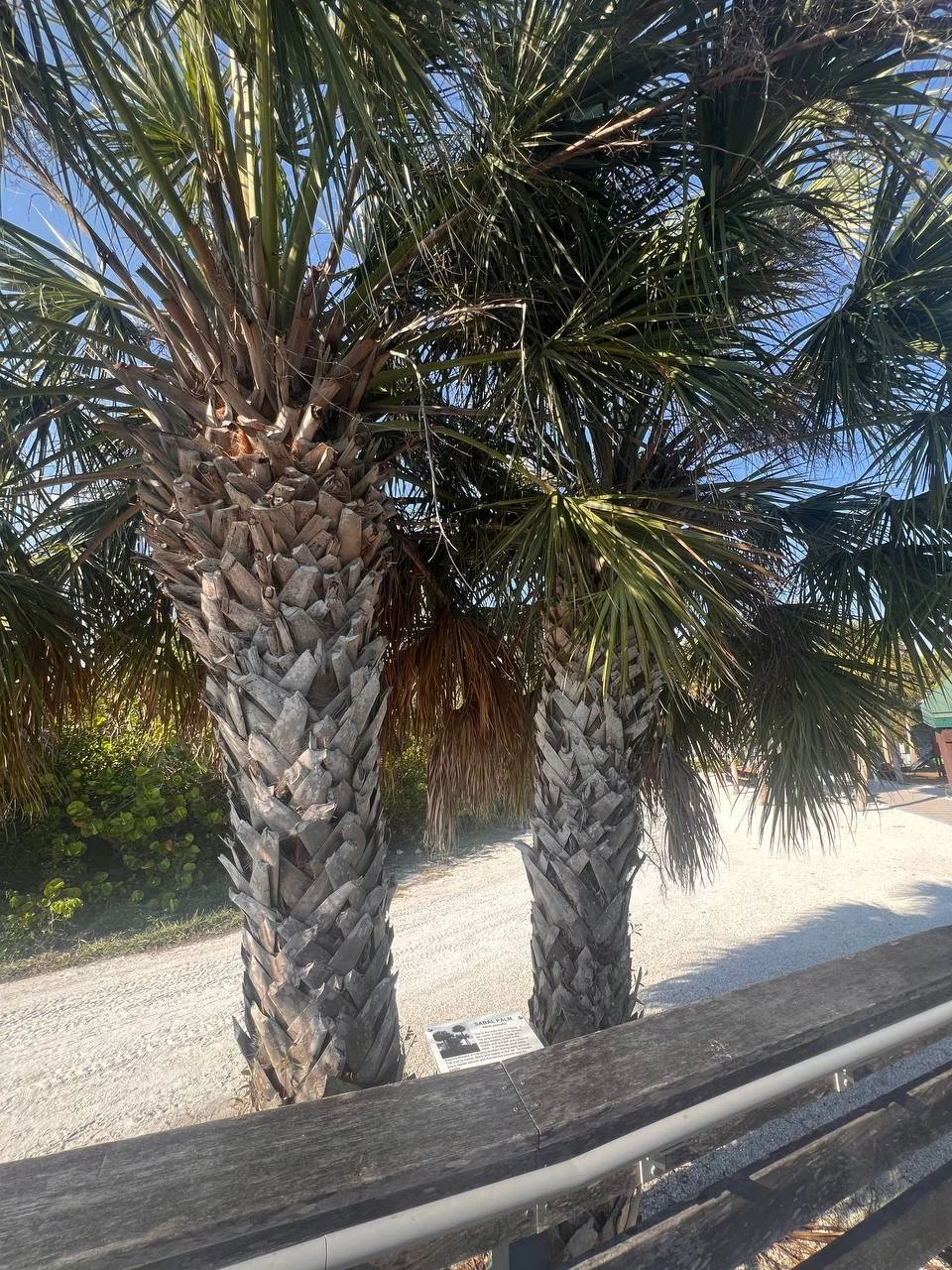
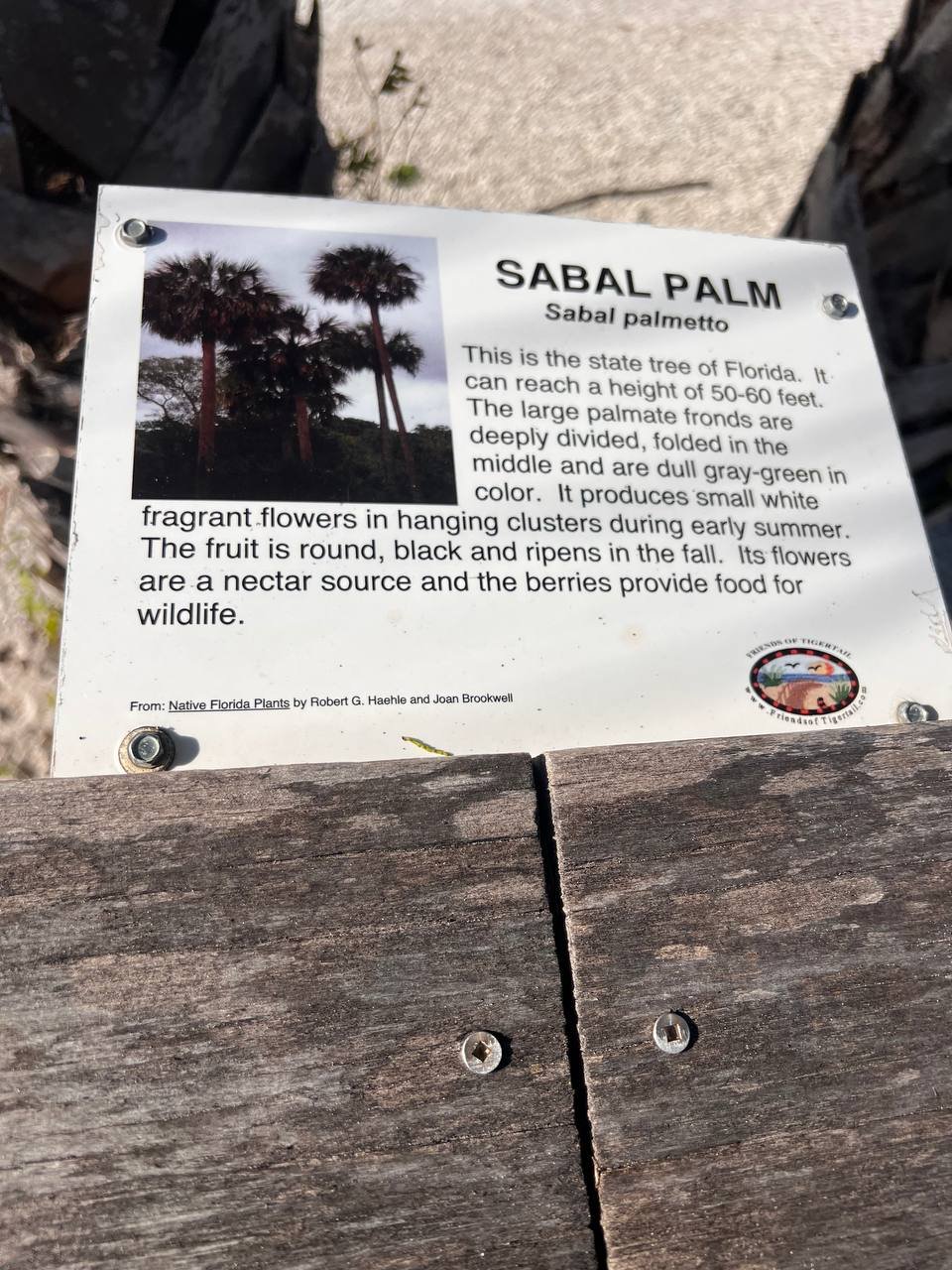
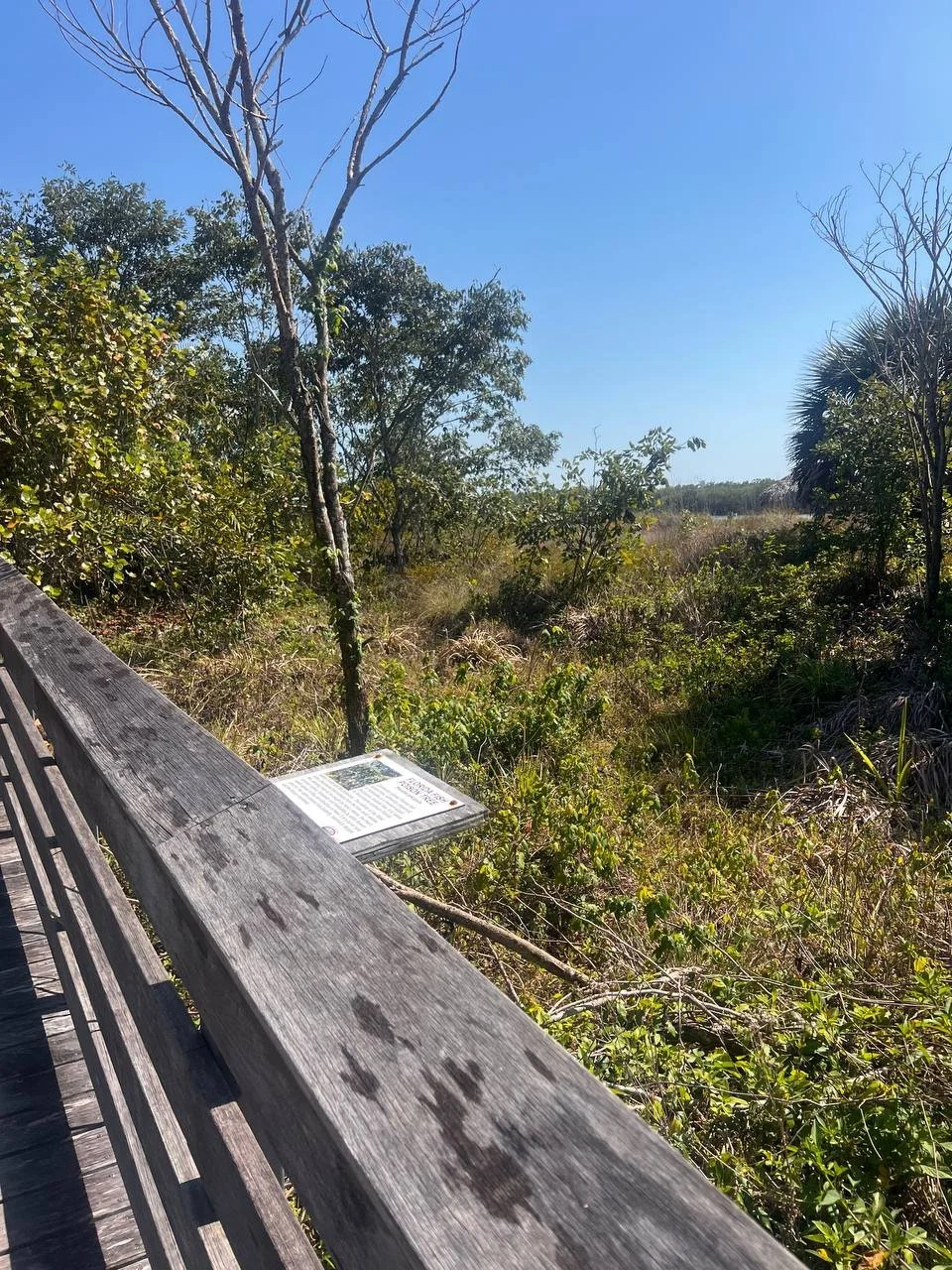
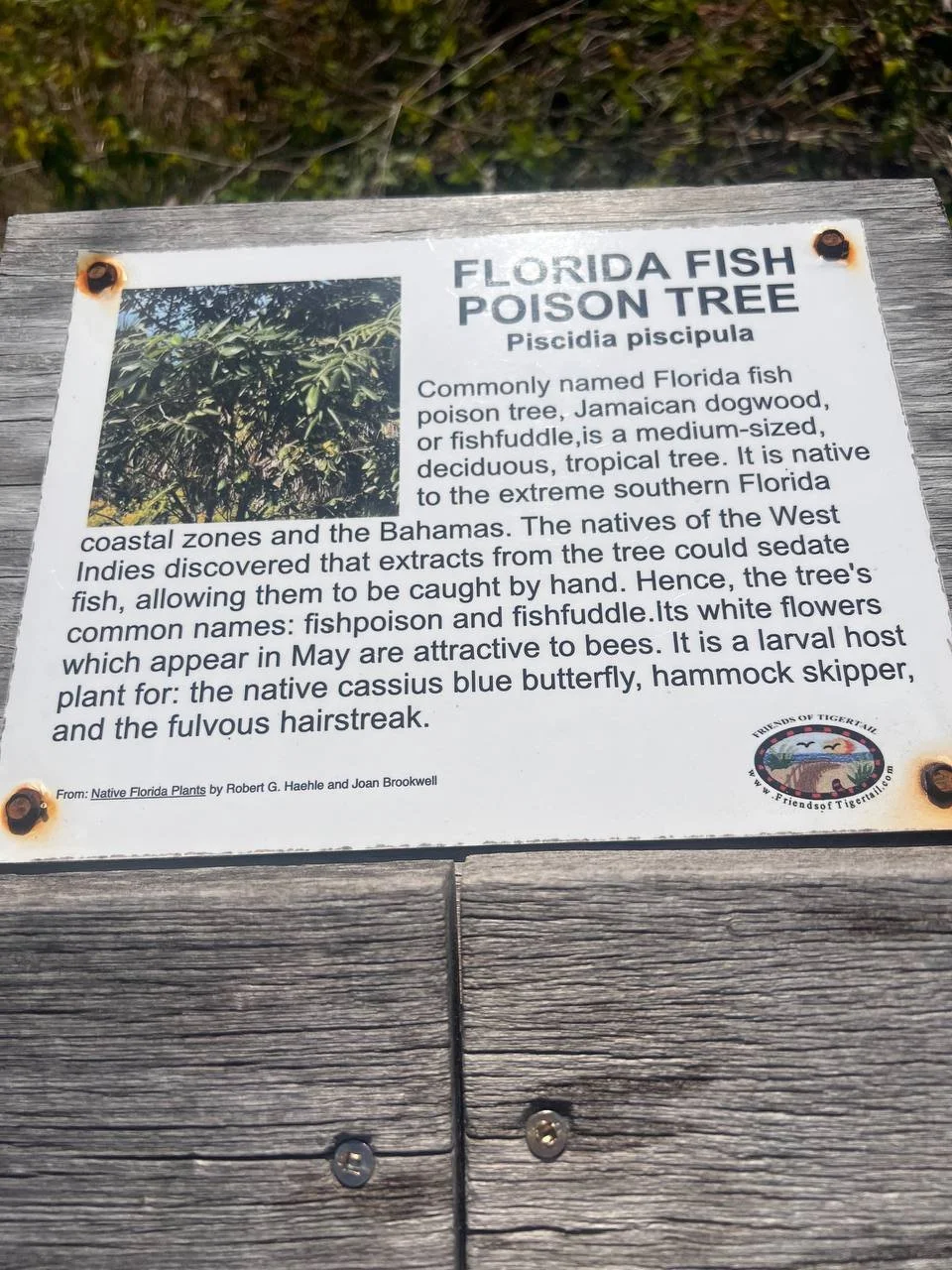
These are the details that make a Gulf Coast day feel like more than a beach day. Tigertail has enough of them to fill an entire afternoon if you're curious enough to stop and read.
Getting there: Tigertail Beach Park is at 430 Hernando Drive, Marco Island, Florida. The GPS will take you to a small parking lot. There's another small lot just past the café at a roundabout. From Sarasota, it's a solid drive south — about an hour and fifteen minutes. Worth it. Plan to make a day of it.
Parking: $8–$10 per vehicle for the day. The lot has about 210 spots but fills quickly on winter and spring weekends. Arrive early or plan for a walk from the overflow area.
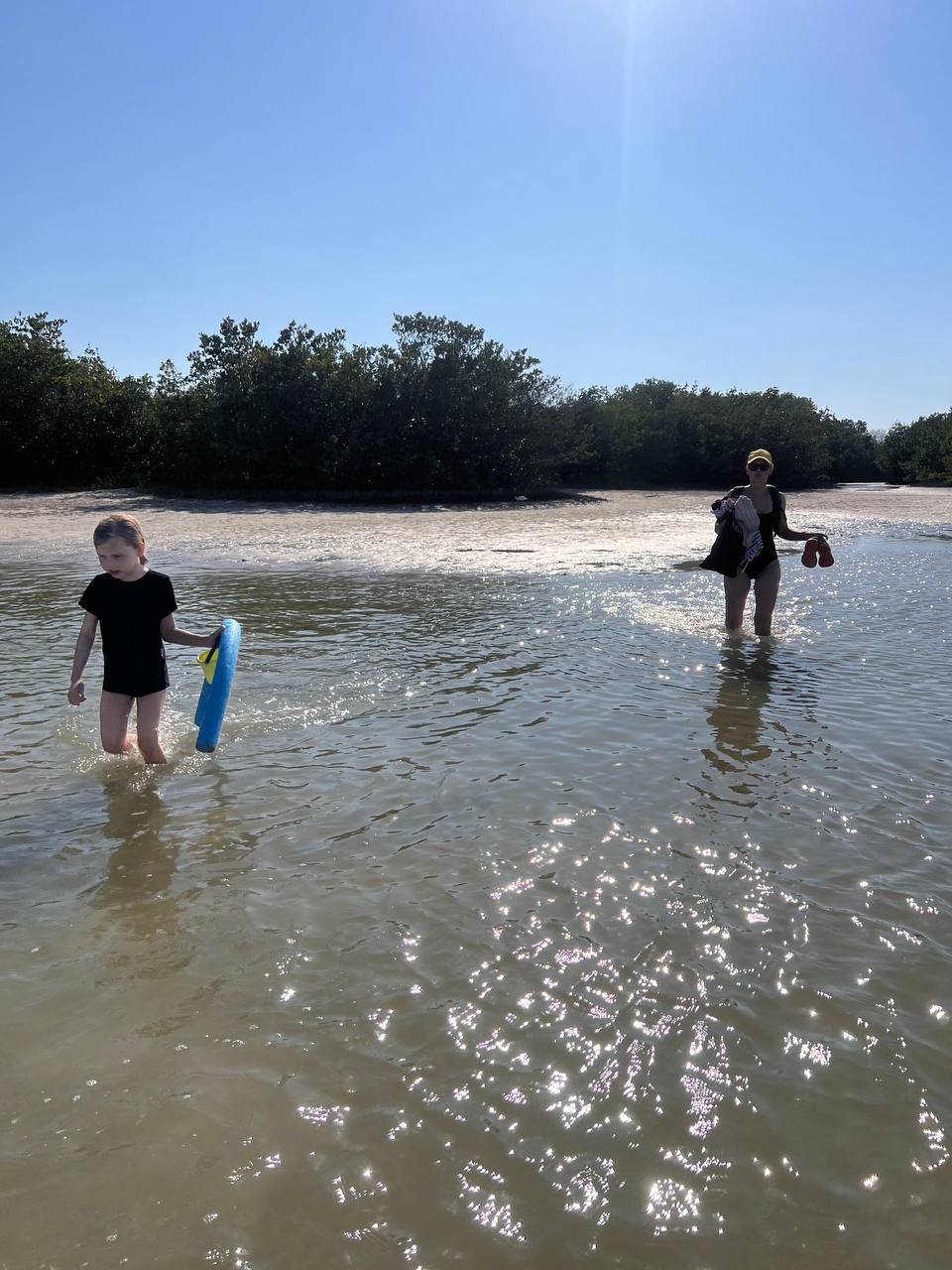
The crossing: The lagoon crossing is roughly fifty yards. Knee to waist deep depending on the tide. The best crossing point is marked by a floating buoy. Low tide makes it significantly easier, especially if you're carrying gear or bringing young children. The bottom is sandy but can feel mucky in spots — the kids will either love this or have opinions about it.
The trail: Short and navigable for all ages. Sea grapes on both sides, a boardwalk section, and then the sand opens up.
On the outer beach: No lifeguards. Alcohol and pets are not permitted. The beach is quiet and uncommercial. There is a two-level observation tower back near the park pavilion with permanently mounted binoculars — worth climbing before you cross for a sense of the full layout.
Go north if you can: The further north you walk on the outer beach, the more remote it feels. Locals walk for hours up the spit. Exercise caution about the tides if you venture far — the currents can be strong when the tide turns, and you don't want to be stranded at the northern tip.'
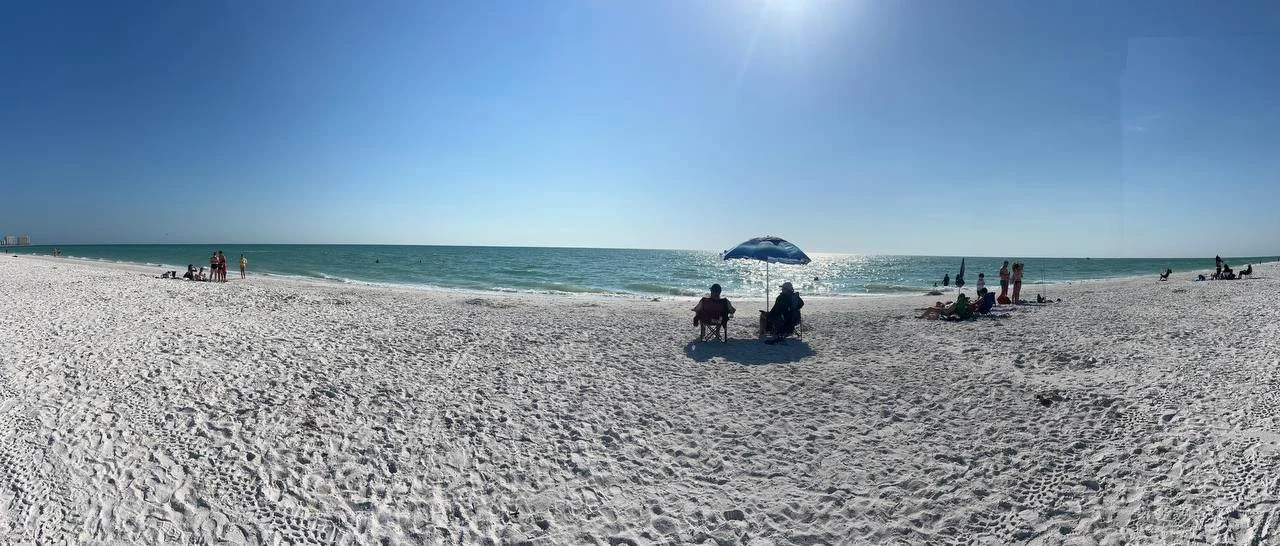
The outer beach
Tigertail is one of those places that rewards the people willing to find it. It asks a little more of you than a standard beach — the drive, the lagoon crossing, the trail — and gives back considerably more than you expect.
We pulled into what looked like a small parking lot on a tired Saturday morning and ended up spending the rest of the day on one of the most beautiful stretches of Gulf Coast beach we've found. The girls discovered that shallow lagoon water is perfect. The trail through the sea grapes is the kind of path that makes a beach feel like an adventure. The sand on the other side is wide and white and unhurried.
This is what the Gulf Coast does, if you let it. It rewards the detour. It rewards the curiosity. It rewards the afternoon you almost didn't take.
Go. Take the long drive. Wade across the lagoon. Push through the sea grapes. Stand on the beach on the other side and look at the Gulf and understand why people build their whole lives around being near this water.
Driftwood Unveiled sources exceptional Tommy Bahama furniture from homes throughout Southwest Florida's Gulf Coast — including, occasionally, Marco Island. Follow our finds on Instagram and Facebook, or browse current inventory at our website.
